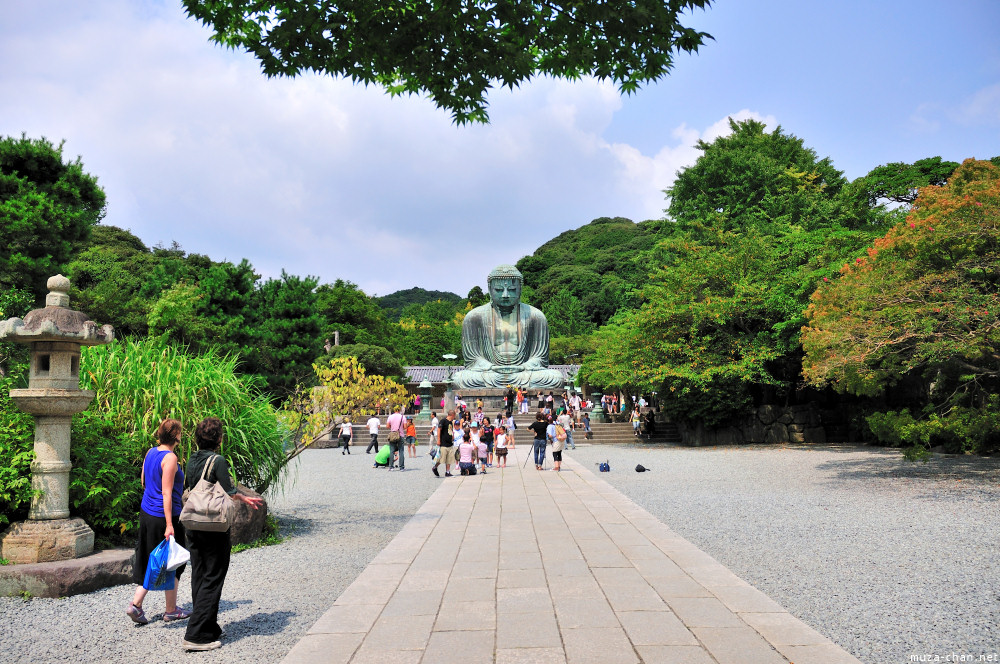
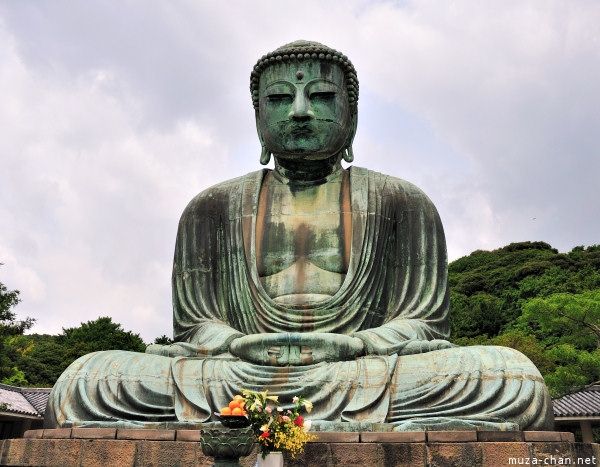
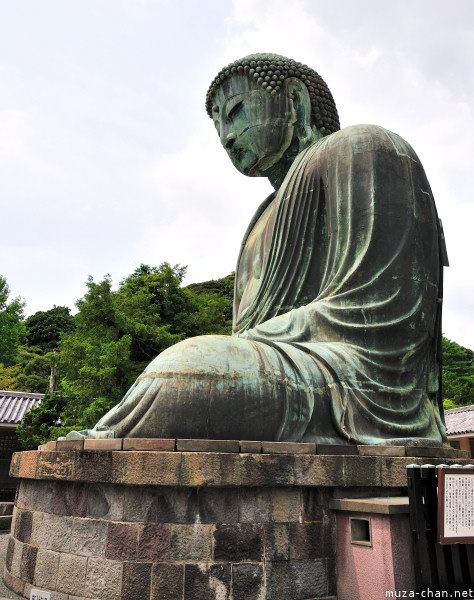
The Great Buddha from Kamakura (Daibutsu) was cast in 1252, with money raised from donations by the priest Joko and was sculpted by Ono-Goroemon and Tanji-Hisatomo.
Click on photo for higher resolution:
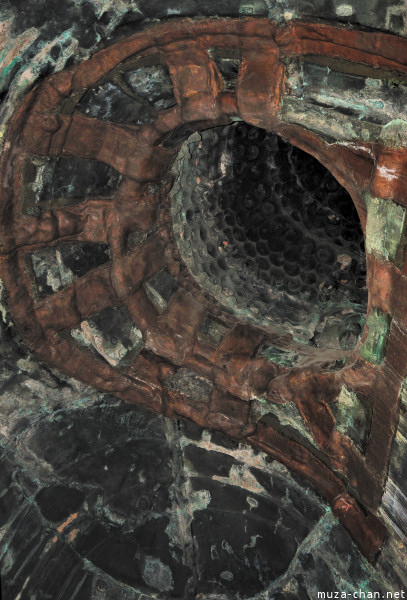
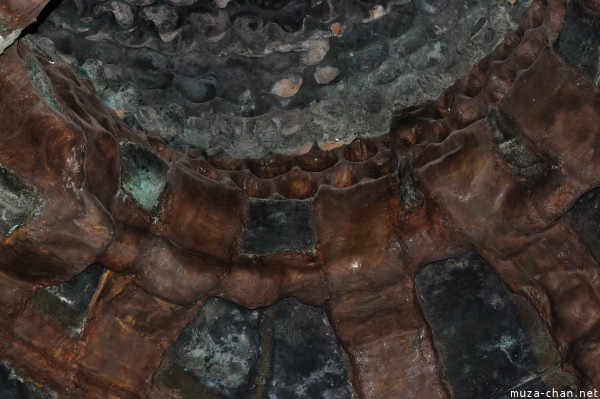
The statue is made from bronze, is 13.35 meters tall and weights approx. 121 tons. The thickness of the bronze varies between 3 and 12 centimeters and because of its huge size, the statue was made from 40 shaped parts welded together, with internal armature. The colossal statue proved to be extremely resistant.
In 1335, the wooden temple where the statue was housed was destroyed by a powerful storm, but Daibutsu was undamaged. Later, in 1498, the entire area was affected by an earthquake followed by a tsunami and again the housing building was destroyed but the statue was safe.
In 1923, after the Great Kanto Earthquake, the base of the statue was damaged, but the bronze Daibutsu remained in good condition.
The interior of the statue can be visited and the construction technique can be clearly seen. You can see the entry to the lower right corner of the photo:
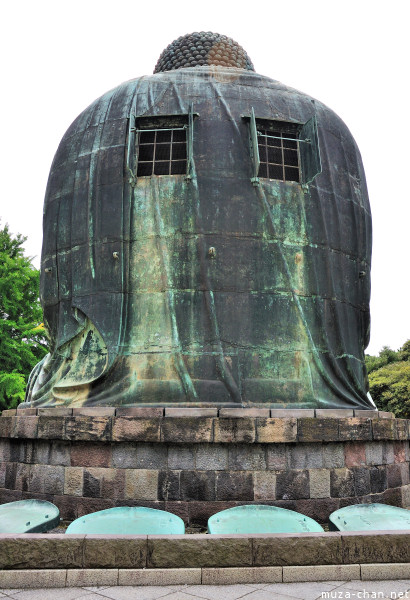
A spiral staircase climbs to a small room located right under the head. You can see in this photo the two small windows illuminating the inside of the statue:
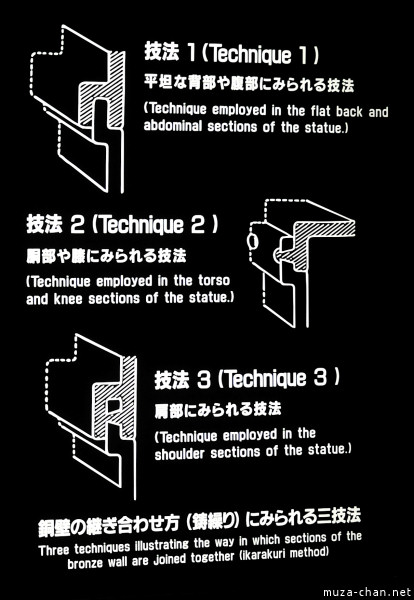
Inside, a detailed diagram explains the amazingly sophisticated technique, called Ikarakuri, used by the builders of the statue to connect together the 40 large bronze pieces.
In 1960, repair and consolidation works started, employing modern materials and techniques. Layers of plastic were applied to the neck to reinforce the head…
… and between the pedestal and the statue was inserted a stainless steel plate, to allow the statue to move freely on the base and to avoid shocks during earthquakes.
With all these improvements, the Kamakura Daibutsu will certainly last for many more centuries to come…
Marele Buddha din Kamakura (Daibutsu) a fost construit în anul 1252, cu bani strânşi din donaţii de preotul Joko şi realizat de doi sculptori, Ono-Goroemon şi Tanji-Hisatomo.
Click on photo for higher resolution:
Statuia este realizată din bronz, are înălţimea de 13,35 metri şi cântăreşte aproximativ 121 tone. Grosimea stratului de bronz variază între 3 şi 13 cm. Din cauza dimensiunilor mari, statuia a fost realizată din 40 de bucăţi separate, sudate între ele prin armături interioare. Colosul obţinut s-a dovedit în timp extrem de rezistent.
În anul 1335, templul din lemn în care era aşezată statuia a fost dărâmat de o furtună puternică, dar statuia a rămas neatinsă. Apoi, în 1498, noua clădire şi restul clădirilor din jur au fost distruse de un cutremur urmat de un tsunami, Daibutsu rămânând iarăşi în picioare.
În timpul Marelui Cutremur Kanto din 1923 baza statuii a fost avariată, însă partea din bronz a rămas intactă.
Tehnica de construcţie se poate vedea în interiorul statuii. Intrarea se vede în partea dreaptă a fotografiei:
De acolo, pe o scară interioară în spirală se urcă într-o sală situată sub nivelul capului. În fotografie se văd cele două ferestre de la mica încăpere din interiorul statuii.
În interior există o diagramă care explică modul uimitor de sofisticat în care s-a realizat sudarea placilor, procedeu numit Ikarakuri.
În anul 1960 s-a început repararea şi consolidarea statuii folosind materiale şi tehnici moderne. Pentru consolidarea capului, la baza gâtului au fost adăugate straturi de material plastic…
… iar între piedestal şi statuie s-a introdus o placă de oţel, care dă posibilitatea statuii să se mişte în timpul cutremurelor, evitând astfel şocurile.
Cu toate îmbunătăţirile aduse, Marele Buddha din Kamakura va rezista cu siguranţă multe secole de acum încolo…